When an appliance breaks down, the question is rarely whether it can be fixed. It is whether fixing it makes sense. Many technicians use the 50% rule. Does the repair cost more than half the price of a comparable new appliance? Replacement is usually the better value.
Working through repair or replace appliance cost factors first helps you make the right call for your budget.
How Old Is the Appliance? (Repair or replace appliance)
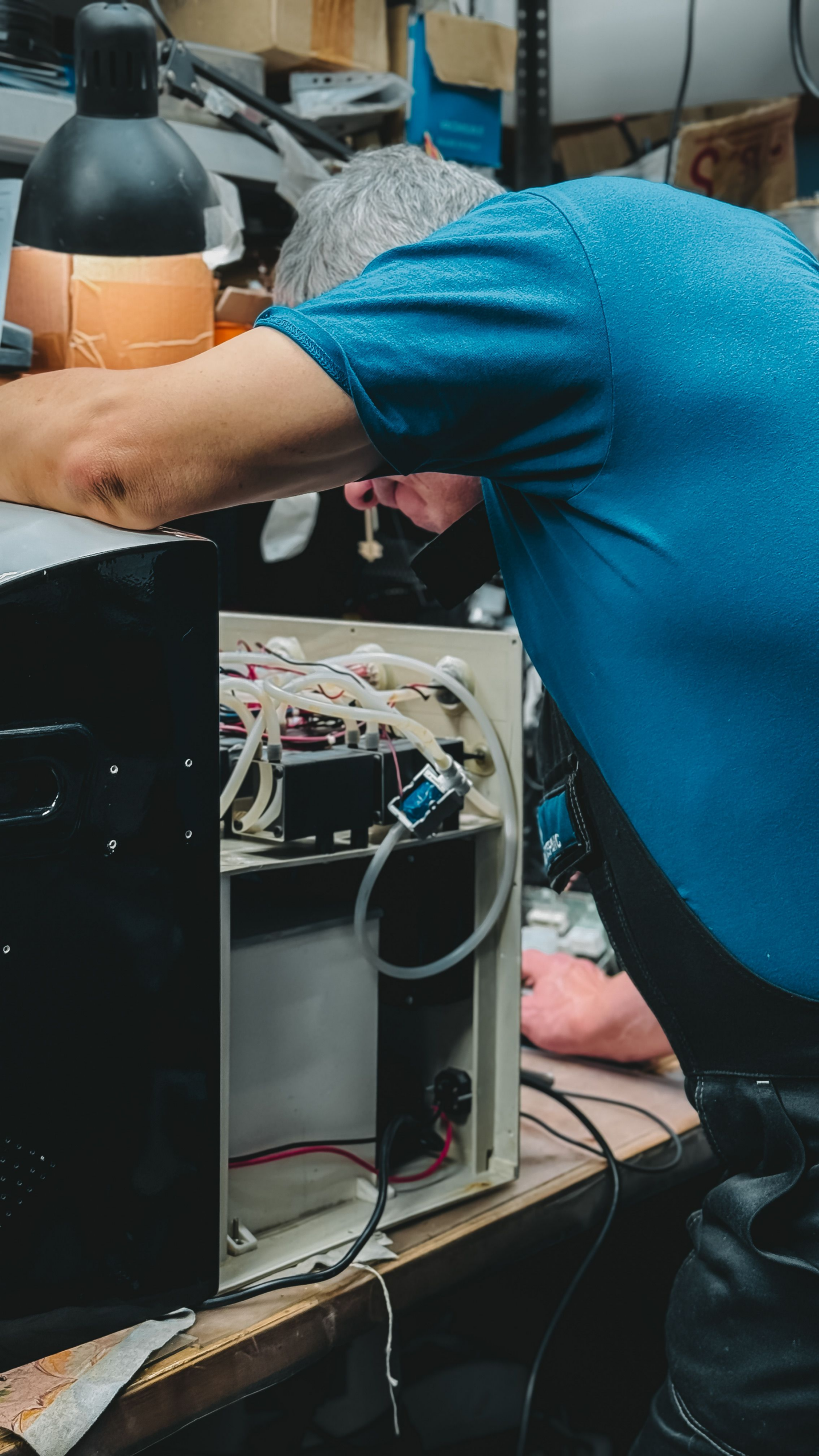
InterNACHI’s life expectancy data puts most major appliances in a predictable range. Refrigerators last 9-13 years and dishwashers around 9. Clothes washers run 5-15 years, dryers around 13, and electric ranges 13-15. An appliance near or past that range is a weaker candidate for a costly repair. One still in its prime is a stronger one.
What Does the Repair Typically Cost?
National average repair costs vary by appliance and problem. Dishwasher repairs average around $160. Washing machines typically run $125-$500 and dryers $150-$400. Oven, stove, or range repairs land between $100-$600, depending on the part. Getting an accurate diagnosis is the only way to know where a specific repair falls in that range.
A Quick Decision Checklist
- Is the appliance past or near the end of its typical lifespan?
- Is the repair cost more than half the price of a new comparable model?
- Has this same appliance needed repairs more than once in the past year?
- Is a replacement part still available for the model?
If you answered yes to two or more of these, replacement may be worth considering. If not, a repair is likely the more cost-effective choice. Our technicians can give you an honest assessment either way when they diagnose the problem in your Conyers, GA home.
The Hidden Costs of Repeated Repairs
A single repair bill rarely tells the whole story. Has an appliance needed two or three service calls this year? The real cost is not the latest invoice. It is the running total, plus the hassle of scheduling around each breakdown. Picture a ten-year-old dishwasher that needed a new pump and now has a control board fault. It has already cost a meaningful fraction of a new unit. Tracking repair history, even informally, makes the repair-or-replace math much clearer than looking at any single bill in isolation.
Energy Efficiency Can Tip the Scale
An inefficient older appliance is not a replacement candidate on its own. It does change the math once a repair is needed too. Refrigerators, washers, and dryers over a decade old use noticeably more energy. Washers also use more water than current ENERGY STAR models. Say an appliance is near the end of its lifespan and facing a repair bill. Utility savings from a newer model can offset the higher upfront cost over time. The repair may still look cheaper in the moment.
Warranty Status Matters More Than People Realize
Check the warranty first. That means a manufacturer warranty, an extended warranty bought at the time of sale, or a home warranty plan. Major components like compressors and motors often carry longer warranty periods. A refrigerator that is otherwise out of warranty might still have a covered compressor. It is a quick check. One phone call to the manufacturer or warranty provider can settle a $500 decision.
When Replacement Is the Clear Answer
Some situations make the decision straightforward regardless of the checklist above. A sealed-system failure on a refrigerator (a leak in the refrigerant lines) is often priced close to or above replacement cost once labor is factored in. A washer or dryer with a cracked drum or tub is usually not economical to repair. And any appliance where the needed part has been discontinued by the manufacturer, which becomes more common after about 10-12 years, leaves repair off the table entirely no matter how minor the rest of the problem is.
Getting a Second Opinion Before You Decide
If the repair-or-replace decision still feels like a toss-up after running through the checklist, a professional diagnosis is worth more than any online calculator. A technician who can see the appliance in person can confirm the exact failed part, check whether related components are also showing wear, and give a firm repair quote to compare directly against replacement cost – rather than the rough estimate ranges in this guide. That real number, specific to your appliance and your home, is usually what finally makes the decision clear.
A Note on Rebuilt or Used Appliances
Replacement doesn’t always mean buying new. For homeowners on a tight budget, a certified refurbished or lightly used appliance can be a reasonable middle ground between an expensive repair and a full-price new unit, as long as it comes with at least a short warranty from the seller. The tradeoff is that a used appliance carries its own unknown history, so it’s worth asking the same lifespan and repair-history questions about it that you’d ask about the one you’re replacing.
Making the Call With Confidence
There’s no universal rule that fits every appliance, every home, and every budget, which is why the checklist above is meant as a starting point rather than a final answer. Weighing age, repair cost, repair history, warranty coverage, and efficiency together, rather than any single factor alone, is what leads to a decision you won’t second-guess a few months later. When in doubt, a quick diagnostic visit from Conyers Appliance Pros gives you the real numbers to decide with confidence.
Help with repair or replace in Conyers, GA
If you would rather not work through this alone, our technicians handle repair or replace for homeowners across Conyers and Rockdale County. You can get an estimate or request a service visit, and we will confirm the details before any work begins.